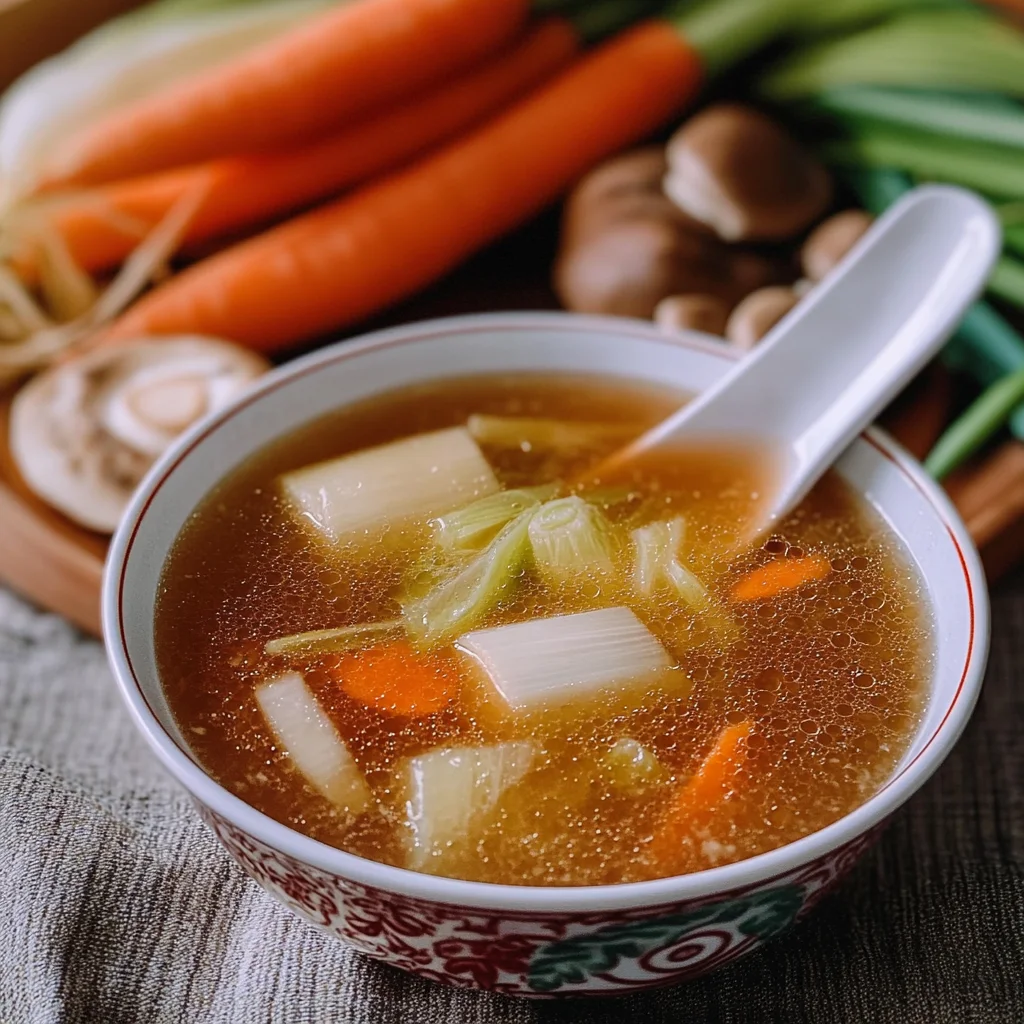
This rich Asian Vegetable Stock is a versatile and flavorful base for countless soups and noodle dishes. Perfect for sipping on its own or enhancing your favorite recipes, this stock will elevate your cooking. Its unique blend of fresh vegetables and aromatic herbs makes it an essential addition to any kitchen, suitable for various occasions.
Why You’ll Love This Recipe
- Easy Preparation: With minimal hands-on time, this stock can simmer away while you focus on other tasks.
- Flavorful Base: The combination of roasted napa cabbage, ginger, and shiitake mushrooms creates a complex flavor profile that enhances any dish.
- Versatile Use: Perfect for soups, stews, or as a cooking liquid for grains—this stock adapts to many recipes.
- Nutritious Ingredients: Packed with vegetables and natural flavors, this stock provides a healthy foundation for your meals.
- Customizable: Feel free to adjust ingredients based on your preferences or what you have on hand.
Tools and Preparation
To make this Asian vegetable stock, having the right tools will make the process smoother. Here’s what you need:
Essential Tools and Equipment
- Large stockpot
- Sheet pan
- Knife
- Cutting board
- Measuring cups
Importance of Each Tool
- Large stockpot: This allows for ample space to simmer all ingredients together without overflowing.
- Sheet pan: Ideal for roasting the napa cabbage evenly, enhancing its flavor before adding it to the stock.
- Knife: A sharp knife ensures safe and efficient vegetable prep.
- Cutting board: Provides a sturdy surface for chopping ingredients neatly.
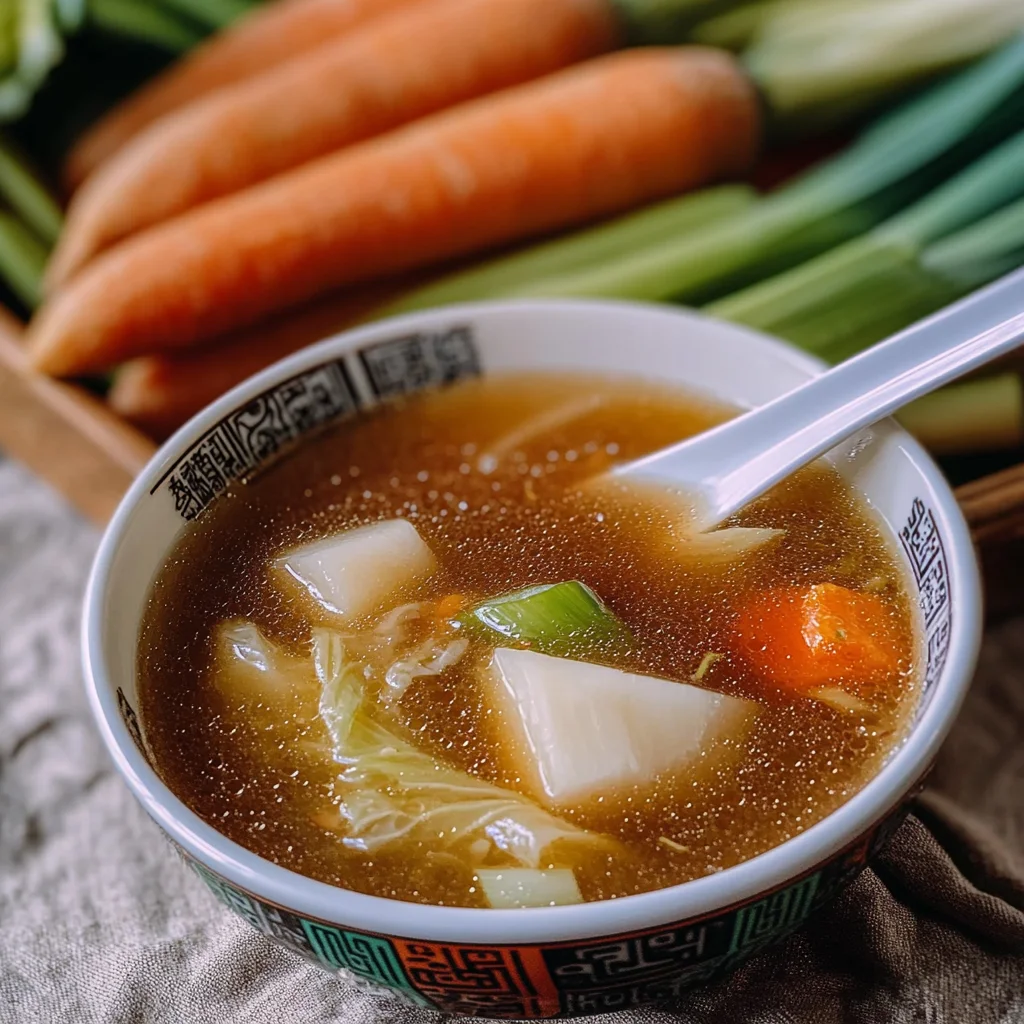
Ingredients
To prepare your delicious Asian vegetable stock, gather the following ingredients:
For the Stock
- 1/2 of a napa cabbage (cut in half lengthwise)
- 2 tablespoons vegetable oil (divided)
- 7 slices ginger (20g, or 0.7 oz.)
- 2 cloves garlic (peeled and cut in half)
- 2 cubes white fermented bean curd (0.8 ounces, 23g, optional)
- 1 onion (peeled and quartered)
- 1 pound carrots (450g, peeled and cut into large chunks)
- 8 scallions (ends removed)
- 8 ounces daikon radish (225g, peeled and cut into chunks)
- 1 5×5 inch piece dried kelp (kombu) (13x13cm, rinsed)
- 16 dried shiitake mushrooms (rinsed)
- 16 cups water (1 gallon, or about 4L)
- salt (to taste)
How to Make Asian Vegetable Stock
Step 1: Preheat the Oven
Preheat your oven to 375 degrees F. Take your napa cabbage half and cut it in half again lengthwise. Place the cabbage on a sheet pan and drizzle lightly with oil. Roast for 25 minutes until it’s slightly caramelized.
Step 2: Prepare the Stockpot
While the cabbage roasts, heat 1 tablespoon of vegetable oil in a large stockpot over medium heat. Add the ginger and garlic; cook for about 2 minutes until fragrant but not browned.
Step 3: Combine Ingredients
Add the optional fermented bean curd to the pot and cook for another minute. Then add the onion, carrots, scallions, daikon radish, dried kelp, dried shiitake mushrooms, and water. When your napa cabbage is done roasting, add it to the pot as well.
Step 4: Simmer the Stock
Bring everything to a boil. Once boiling, reduce the heat to low and cover with a lid. Allow it to simmer gently for about 4 hours.
Step 5: Strain and Season
After simmering, strain the stock through a fine-mesh sieve into another pot or bowl. Season with salt to taste before using or storing.
Enjoy your homemade Asian Vegetable Stock as a flavorful base in soups or simply enjoy it on its own!
How to Serve Asian Vegetable Stock
Asian vegetable stock is incredibly versatile and can enhance a variety of dishes. Whether enjoyed on its own or as a base for your favorite recipes, there are many ways to serve this flavorful stock.
Sip it Solo
- Enjoy it warm in a bowl as a comforting broth, garnished with fresh herbs or a splash of soy sauce for added flavor.
Base for Soups
- Use the stock as a foundation for any soup. Add noodles, vegetables, or proteins like chicken or tofu for a hearty meal.
Cooking Grains
- Substitute water with Asian vegetable stock when cooking rice, quinoa, or other grains. This infuses them with rich flavors.
Fondue Style
- Set up a fondue station using the stock as the dipping broth. Include assorted vegetables and proteins for guests to cook at the table.
Stir-Fry Sauce
- Reduce the stock in a pan to create a flavorful stir-fry sauce. Toss in your favorite vegetables and protein for an easy meal.
Sauce Base
- Use the stock as a base for sauces or gravies. Combine it with soy sauce and cornstarch for a quick thickening agent to drizzle over dishes.
How to Perfect Asian Vegetable Stock
Creating the perfect Asian vegetable stock requires attention to detail and quality ingredients. Here are some tips to elevate your stock-making skills.
- Choose Fresh Vegetables: Use fresh, high-quality vegetables for the best flavor. Wilted or old produce can make your stock taste bland.
- Roast Your Ingredients: Roasting the napa cabbage and aromatics before boiling adds depth and richness to your stock.
- Simmer Slowly: Allowing the stock to simmer on low heat for several hours extracts maximum flavor from the ingredients.
- Strain Thoroughly: After simmering, strain your stock well to remove all solids. A clear broth enhances the presentation of your dishes.
- Adjust Seasoning: Taste the stock before serving and adjust seasoning with salt. This ensures that each batch meets your flavor expectations.
- Store Properly: Let it cool completely before storing in airtight containers. Refrigerate for up to one week or freeze for longer preservation.
Best Side Dishes for Asian Vegetable Stock
Complementary side dishes can enhance your meal experience with Asian vegetable stock. Here are some great options to consider:
- Vegetable Dumplings: Steamed dumplings filled with assorted vegetables pair perfectly with hot broth.
- Edamame Beans: Lightly salted edamame beans offer a healthy snack option that contrasts nicely with savory flavors.
- Spring Rolls: Fresh spring rolls filled with crunchy vegetables provide a refreshing crunch alongside warm soup.
- Rice Noodles: Cooked rice noodles tossed in sesame oil make a delightful addition when served in broth.
- Stir-Fried Bok Choy: Quickly stir-fried bok choy adds vibrant color and nutrition that complements any soup.
- Miso Glazed Eggplant: Grilled eggplant brushed with miso glaze brings umami richness that pairs beautifully with vegetable stock.
- Crusty Bread: Serve slices of crusty bread on the side for dipping into flavorful soups.
- Sesame Spinach Salad: A light salad made with sesame dressing offers freshness that balances hearty dishes well.
Common Mistakes to Avoid
Making Asian vegetable stock can be a delightful experience, but there are some common pitfalls to watch out for.
- Bold ingredient selection: Using subpar or old vegetables can spoil the flavor. Always choose fresh, high-quality vegetables for the best taste.
- Bold overcooking: Simmering the stock for too long can lead to bitterness. Stick to the recommended cooking time for optimal results.
- Bold neglecting seasoning: Forgetting to season your stock can leave it bland. Taste and adjust the salt before serving.
- Bold improper straining: Failing to strain the stock thoroughly can result in a cloudy liquid. Use a fine-mesh strainer for a clear stock.
- Bold skipping roasting: Not roasting the napa cabbage may lead to less depth of flavor. Always roast it as directed for a richer taste.
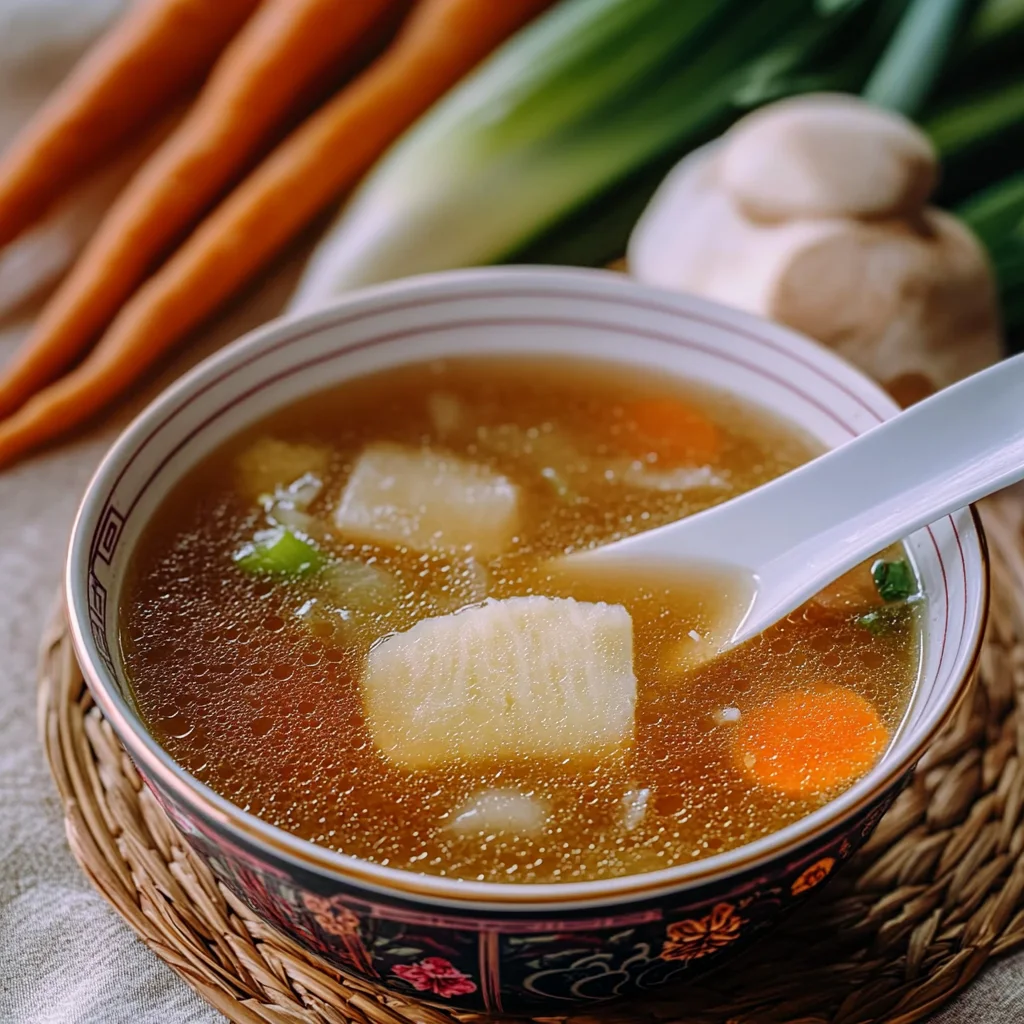
Storage & Reheating Instructions
Refrigerator Storage
- Store your Asian vegetable stock in airtight containers.
- It can last up to 5 days in the refrigerator.
Freezing Asian Vegetable Stock
- Freeze in portion-sized containers or freezer bags.
- Properly stored, it will maintain quality for about 3 months.
Reheating Asian Vegetable Stock
- Oven: Preheat to 350°F (175°C) and heat the stock in an oven-safe container until warmed through.
- Microwave: Heat in short intervals, stirring in between to ensure even warming.
- Stovetop: Pour into a pot and heat over medium-low, stirring occasionally until hot.
Frequently Asked Questions
Here are some common questions about making Asian vegetable stock.
What is Asian Vegetable Stock?
Asian vegetable stock is a flavorful broth made from various vegetables and aromatics, perfect as a base for soups and sauces.
How do I enhance the flavor of my Asian Vegetable Stock?
You can enhance flavors by adding more aromatics like lemongrass or spices such as star anise during cooking.
Can I use frozen vegetables for Asian Vegetable Stock?
Yes, frozen vegetables can be used; just ensure they are free from added sauces or seasonings.
How long does homemade Asian Vegetable Stock last?
Homemade Asian vegetable stock lasts up to 5 days in the refrigerator and about 3 months in the freezer when stored properly.
Final Thoughts
This Asian vegetable stock is not only versatile but also rich in flavors that can elevate any dish. You can customize it by adding different vegetables or herbs according to your preference. Give it a try and enjoy its comforting goodness!
Asian Vegetable Stock
- Total Time: 4 hours 15 minutes
- Yield: Approximately 8 servings (8 cups) 1x
Description
Asian Vegetable Stock is a rich and flavorful base that enhances soups, stews, and various dishes with its vibrant taste. Bursting with the essence of fresh vegetables and aromatic herbs, this stock serves as a versatile foundation for countless culinary creations. Whether enjoyed on its own or used to elevate your favorite recipes, it brings warmth and depth to your meals. Simple to prepare, you can let it simmer while focusing on other tasks in the kitchen. Packed with nutritious ingredients, this stock is perfect for health-conscious cooking enthusiasts looking to add a homemade touch to their dishes.
Ingredients
- 1/2 of a napa cabbage (cut in half lengthwise)
- 2 tablespoons vegetable oil (divided)
- 7 slices ginger (20g, or 0.7 oz.)
- 2 cloves garlic (peeled and cut in half)
- 2 cubes white fermented bean curd (optional)
- 1 onion (peeled and quartered)
- 1 pound carrots (450g, peeled and cut into large chunks)
- 8 scallions (ends removed)
- 8 ounces daikon radish (225g, peeled and cut into chunks)
- 1 5×5 inch piece dried kelp (kombu) (13x13cm, rinsed)
- 16 dried shiitake mushrooms (rinsed)
- 16 cups water (1 gallon, or about 4L)
- salt (to taste)
Instructions
- Preheat the oven to 375°F (190°C). Cut napa cabbage in half lengthwise, drizzle with vegetable oil, and roast for 25 minutes until caramelized.
- In a large stockpot, heat 1 tablespoon of vegetable oil over medium heat. Add ginger and garlic; sauté for 2 minutes until fragrant.
- If using, add fermented bean curd and cook for an additional minute. Then incorporate onion, carrots, scallions, daikon radish, dried kelp, dried shiitake mushrooms, and water into the pot.
- After roasting, add the napa cabbage to the pot. Bring the mixture to a boil, then reduce heat to low and cover; simmer for 4 hours.
- Strain through a fine-mesh sieve into another container, season with salt to taste.
- Prep Time: 15 minutes
- Cook Time: 4 hours
- Category: Soup
- Method: Simmering
- Cuisine: Asian
Nutrition
- Serving Size: 1 cup (240ml)
- Calories: 50
- Sugar: 3g
- Sodium: 300mg
- Fat: 2g
- Saturated Fat: 0g
- Unsaturated Fat: 1g
- Trans Fat: 0g
- Carbohydrates: 9g
- Fiber: 2g
- Protein: 2g
- Cholesterol: 0mg